It started with a phone call no family ever wants to receive.
A man was rushed to the hospital after a heart attack. Four hours later, in the emergency room, he passed away.
Everything happened too fast. There was no time to process the loss. The family was still in shock.
And then, days later, another shock arrived.
The Bill That Changed Everything
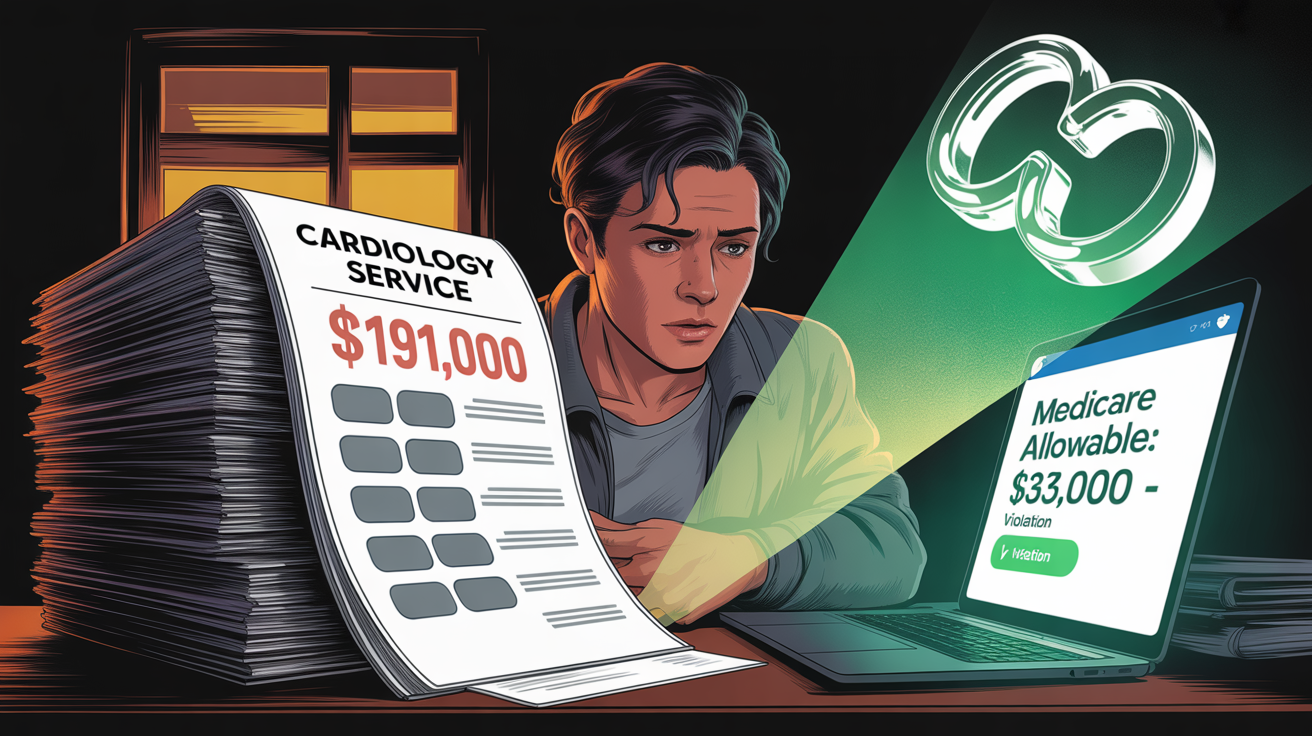
The hospital sent the final medical bill.
$191,000.
The number didn’t even feel real. For many families, that amount is a lifetime of savings.
But the problem wasn’t just the amount.
It was the question that haunted them for days:
“Did it really cost this much?”
Something Felt… Off
At first, the family tried to accept it. Hospitals are expensive. Emergency care is complex.
But curiosity turned into suspicion.
They went through the bill line by line.
The charges were long. The descriptions were vague. Many pages, but very little clarity.
One line stood out:
Cardiology Services – $70,000
No explanation. No breakdown. Just a massive number.
That’s when the family knew something wasn’t right.
Asking the Right Questions
The family requested the billing codes used for each procedure.
In the U.S., hospitals usually bill using standard medical codes (like CPT and HCPCS codes). These are the same codes Medicare uses to decide what it will pay for.
The hospital responded with something unusual:
“We use custom internal codes for many procedures.”
That raised even more red flags.
So the family pushed further. They asked:
- What are the custom codes?
- What are the equivalent Medicare codes for each one?
That’s when the excuses started.
Months of Excuses
The hospital delayed for weeks.
Then months.
They blamed:
- Computer issues
- Missing records
- Internal audits
Honestly, the kind of excuses you’d expect to see in a movie.
But eventually, after constant pressure, the hospital handed over the codes.
That’s when the family did something unexpected.
Enter AI
They took:
- The full hospital bill
- The procedure codes
- Medicare billing rules and guidelines
And fed everything into Claude AI.
Then they asked one simple question:
“If this case were billed under Medicare rules, how much would Medicare actually allow?”
The answer was shocking.
What the AI Found
The AI didn’t guess. It followed public Medicare billing rules.
Here’s what stood out.
1. Improper Unbundling of Procedures
Under Medicare rules, many smaller procedures are bundled into a larger one.
That means:
- You bill for the main procedure
- You do not bill separately for included sub-procedures
But the hospital did exactly that.
They billed:
- The main cardiology procedure
- And multiple bundled sub-procedures separately
This alone inflated the bill by tens of thousands of dollars.
2. Duplicate Charges
Some procedures appeared more than once.
Same code. Same description. Same service.
Billed twice.
This is one of the most basic billing errors — and yet, it happened.
3. Overbilling for Mechanical Ventilation
The hospital billed for mechanical ventilation as if it was used continuously.
But records showed:
- The patient was not on a ventilator the entire time
- In some periods, the ventilator was on standby
- In others, the patient was breathing on their own
Under Medicare rules, ventilation is billed based on actual usage time, not assumptions.
The Real Number
When the AI calculated everything according to Medicare’s allowed amounts and rules, the total came out to around $33,000.
Not $191,000.
Taking Action
The family didn’t post on social media. They didn’t argue emotionally.
Instead, they used AI to:
- Draft a formal legal notice
- Cite specific Medicare billing violations
- Demand a corrected bill
- Threaten legal action if the hospital refused
Weeks passed.
Then the hospital responded.
The Outcome
The hospital revised the bill.
The final amount?
$33,000.
The family saved $158,000.
Not through connections. Not through luck. But through information.
The Real Lesson
This story isn’t about hospitals being evil. And it’s not about AI being magical.
It’s about asking better questions.
AI didn’t invent new rules. It simply:
- Read the fine print
- Applied existing regulations
- Did the work humans rarely have time to do
For $20, the family gained clarity, confidence, and leverage.
Final Thought
AI isn’t just for writing code or generating images.
Used correctly, it can:
- Expose hidden errors
- Protect people from financial harm
- Turn confusion into clarity
This is how AI should be used.
Efficiently. Responsibly. And for good.